
Last updated: 2026-08-26
Roofing Issaquah is a roofing company serving Issaquah and Eastside King County, and storm damage roof repair is one of the services we handle most. This page covers what the work involves here specifically — the climate, the code, and what it costs — rather than what it involves in general.
What we do on the first visit
The first visit is an inspection, not a sales call. We walk the roof with you, check the deck from the attic side where we can, count valleys and penetrations, and note the pitch and how much staging or safety equipment the job needs. We confirm whether any prior layers are on the roof already — code allows a maximum of two before a full tear-off is required — and then you get a written per-square price with tear-off and any deck repair as separate lines.
If we think repair is the better spend than replacement, or a different material suits your situation better, we say so on that visit — including when it means the smaller job for us.
What's included
- Same-week on-site assessment after a storm, prioritized over routine work
- Clear documentation distinguishing sudden storm damage from pre-existing moss/age-related wear — the distinction that determines whether insurance covers it
- Time-stamped photos of all damage before any repair begins, in the format adjusters expect
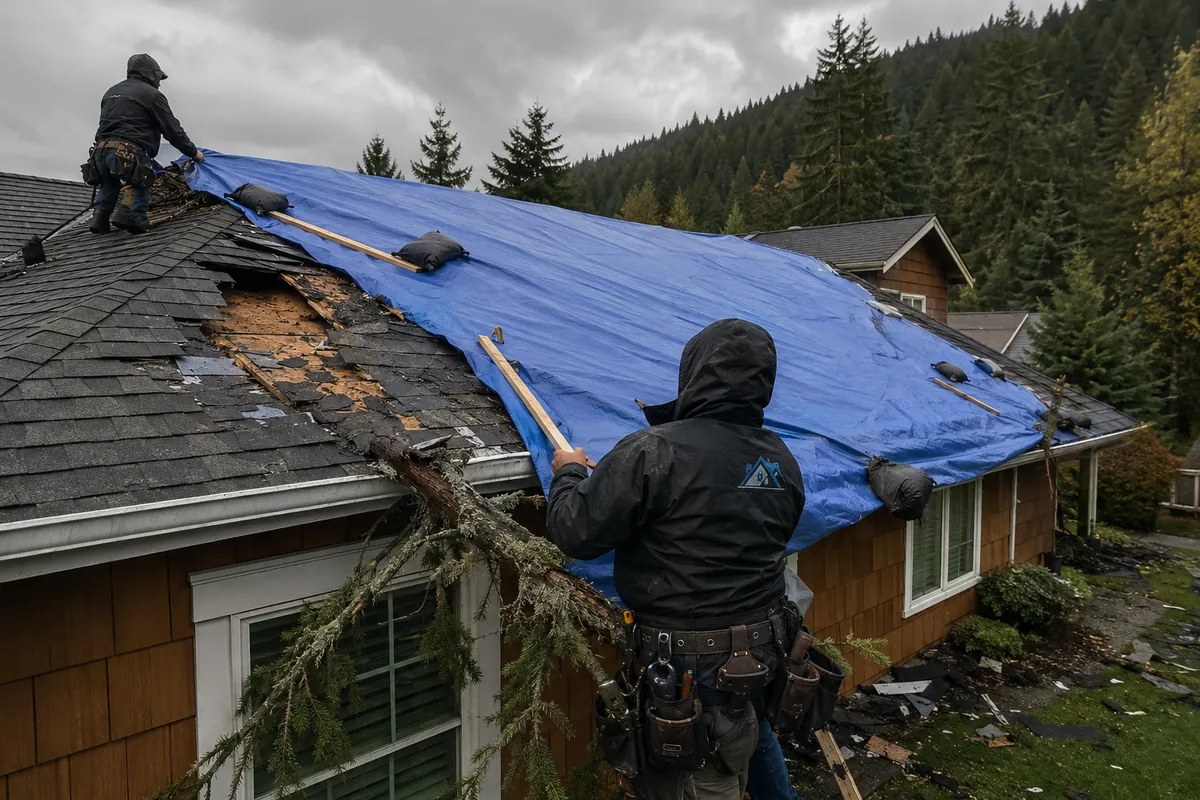
- Temporary protection (tarping) where a repair can't happen immediately and further water intrusion is a risk
- A written repair scope you can hand directly to your insurance adjuster
- Coordination availability for the adjuster's own site visit if requested
- Full repair once the scope is agreed, with before/after documentation
- A copy of all documentation for your own insurance file
What this costs
storm damage roof repair doesn't fit a single published price range, because the scope depends on what an on-site assessment of your specific roof and situation finds. We give you a written scope and price after that free assessment, before any work starts.
When it needs doing
- Missing, torn, or visibly lifted shingles or shakes right after a windstorm
- A new leak that started during or immediately after a storm
- Visible debris impact damage (fallen branches, hail)
- Flashing torn loose or visibly bent by wind
- Uncertainty about whether damage is storm-related or pre-existing wear
- Need for insurance-ready documentation before filing a claim
Related reading
These go deeper on the questions that come up most on this job: